

Euro Cylinder Multi Point Lock
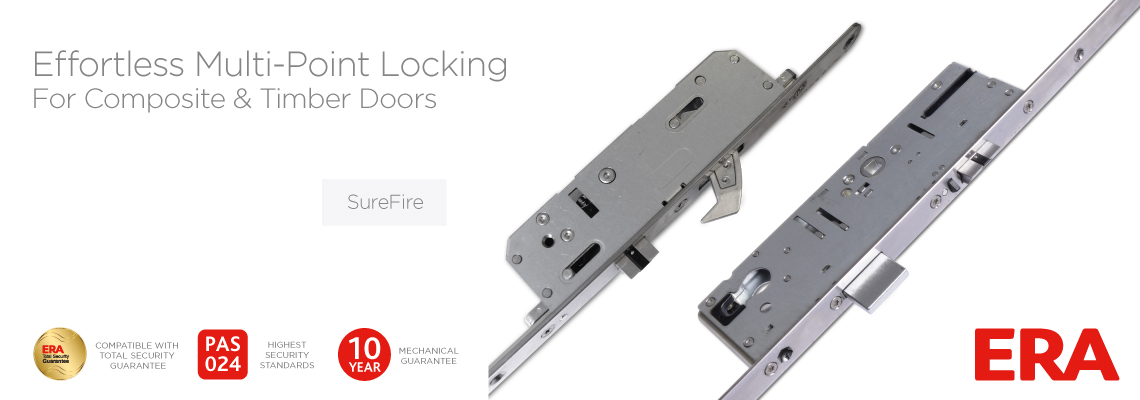
- SureFire
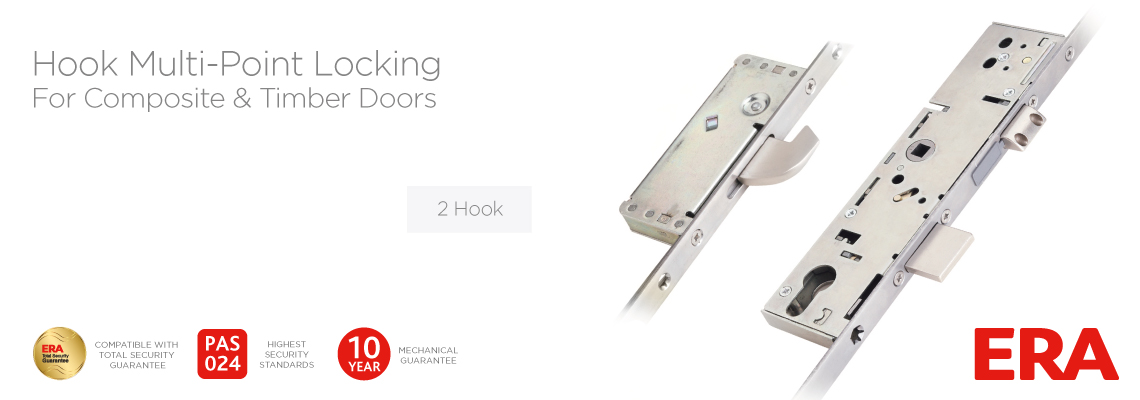
- 2 Hook
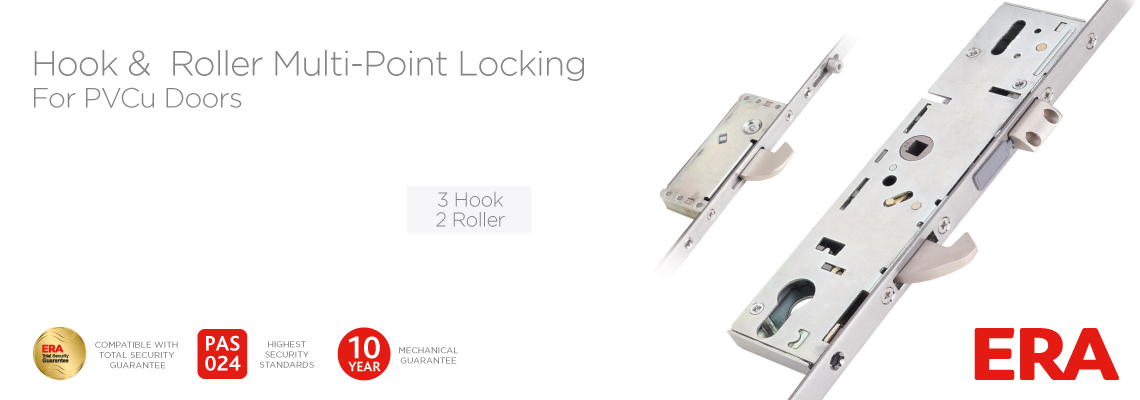
- 3 Hook 2 Roller
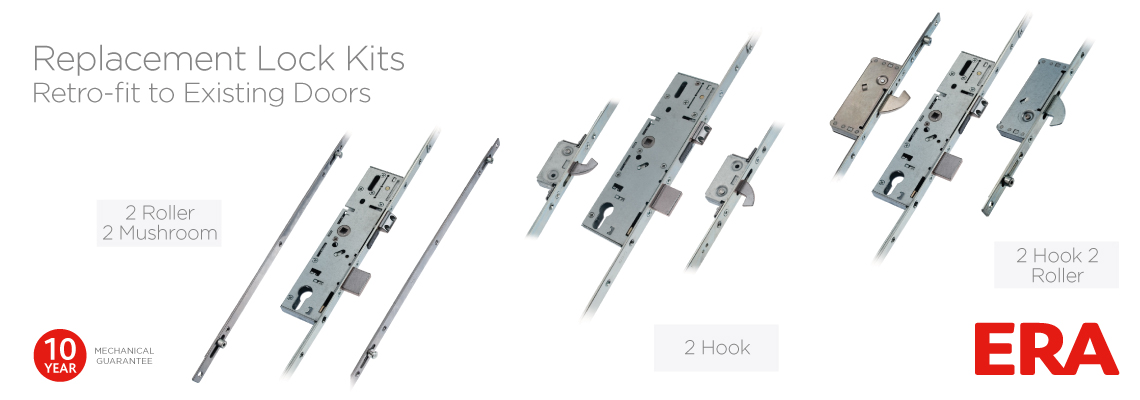
- Replacement
ERA's euro cylinder multi-point door locks are the locking mechanism of choice, combining straightforward installation with robust, multi-point security performance.
Suitable for PVCu, composite and timber doors, our euro cylinder multi-point lock range gives trade installers and door manufacturers a reliable, well-specified locking solution that works across the most common door systems and configurations encountered on site.
A multi-point door lock works on a fundamentally different principle to a single-point lock.
Where a traditional lock secures the door at just one point in the frame, a multi-point lock engages simultaneously at multiple points along the door's height when the handle is lifted — typically using a combination of hooks, rollers and bolts that all drive into the keep simultaneously.
Think of it like a zip fastener versus a single button: a zip engages along the full length, distributing the load and making it far harder to force open.
That's exactly the principle at work in a multi-point lock, and it's why this format has become the standard for modern entrance door security.
ERA's euro cylinder multi-point lock range is built around the most widely used cylinder format in the UK market.
Euro profile cylinders slot directly into the lock body, allowing installers to specify the most appropriate cylinder — whether that's a standard security cylinder, a British Standard 1-star option or a British Standard 3-star anti-snap cylinder — to match the security requirement of the project.
This separation of lock body and cylinder gives specifiers flexibility to upgrade the cylinder independently without replacing the lock, which is a significant practical advantage in both new installation and replacement scenarios.
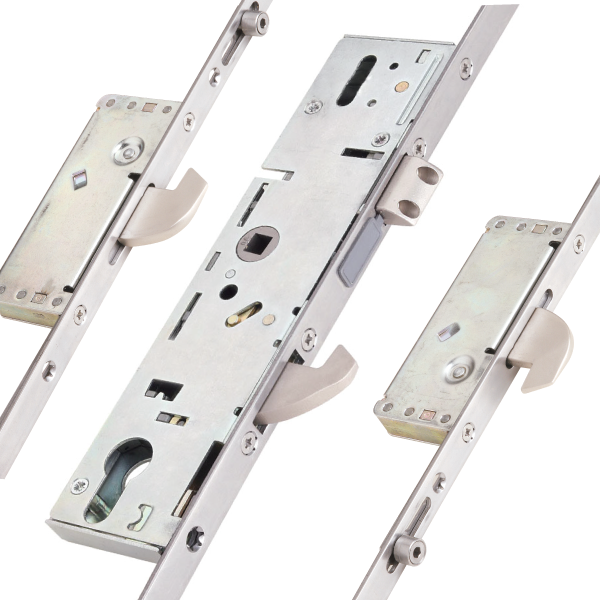
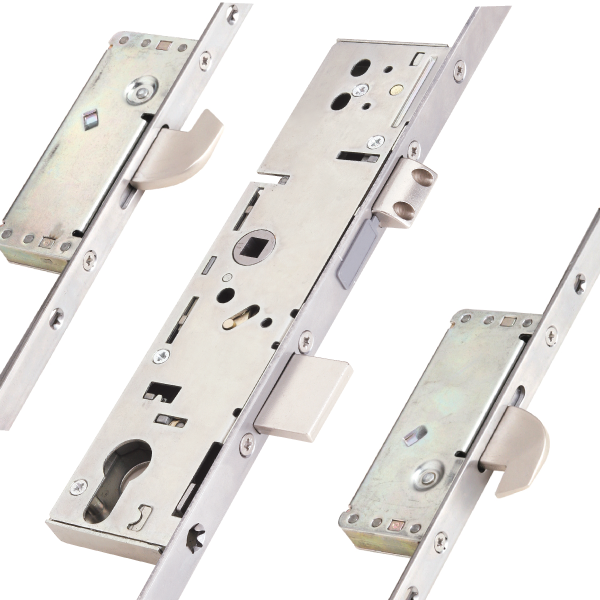
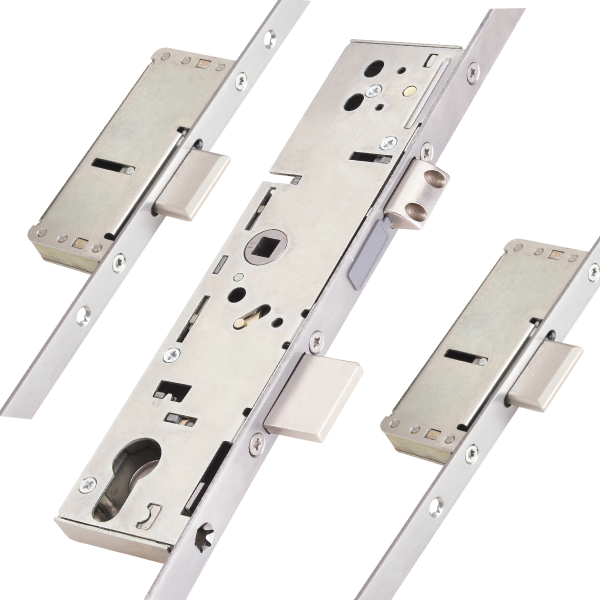
Our range covers hook and roller locks for PVCu doors, hook locks for composite and timber doors, bolt locks for composite and timber doors, passive locks for double door configurations, and replacement locks for upgrading or repairing existing installations.
This breadth of product ensures that whether you're working on a new build, a commercial fit-out or a like-for-like replacement, ERA has the right euro cylinder multi-point lock for the job.
For new installations, the choice between hook and roller locks and hook-only locks is primarily determined by the door type and profile.
PVCu doors are typically best served by hook and roller combinations — such as our popular 3 Hook 2 Roller 6000 Series — where the rollers provide compression against the weatherseal to create a better seal as well as a secure close.
Composite and timber doors, which tend to have more rigid frames and different sealing requirements, are generally better suited to hook-only or bolt-style configurations.
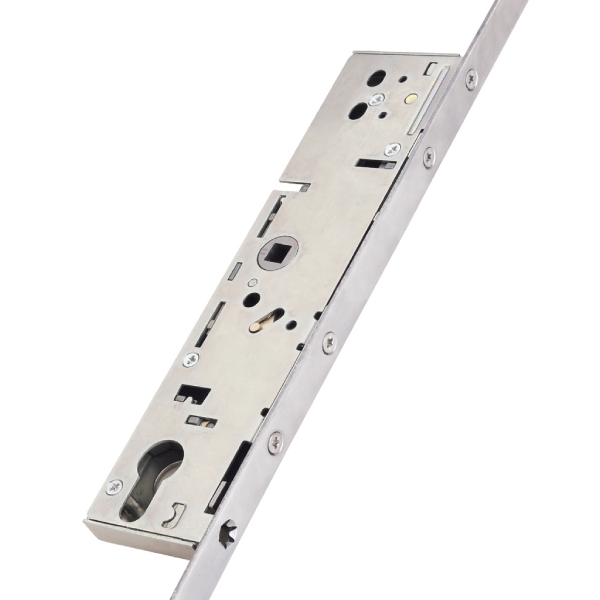
For replacement applications, ERA's dedicated replacement lock range makes it straightforward to upgrade an ageing or failed multi-point lock on an existing door without requiring a full door replacement.
With a variety of hook and roller configurations available, our replacement lock kits are designed to be as broadly compatible as possible with the most common lock chassis dimensions found in installed UK entrance doors.
Categories
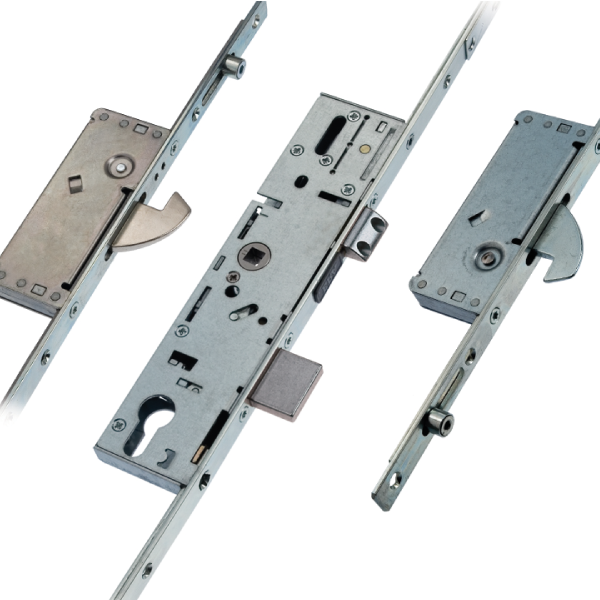
Featured Products
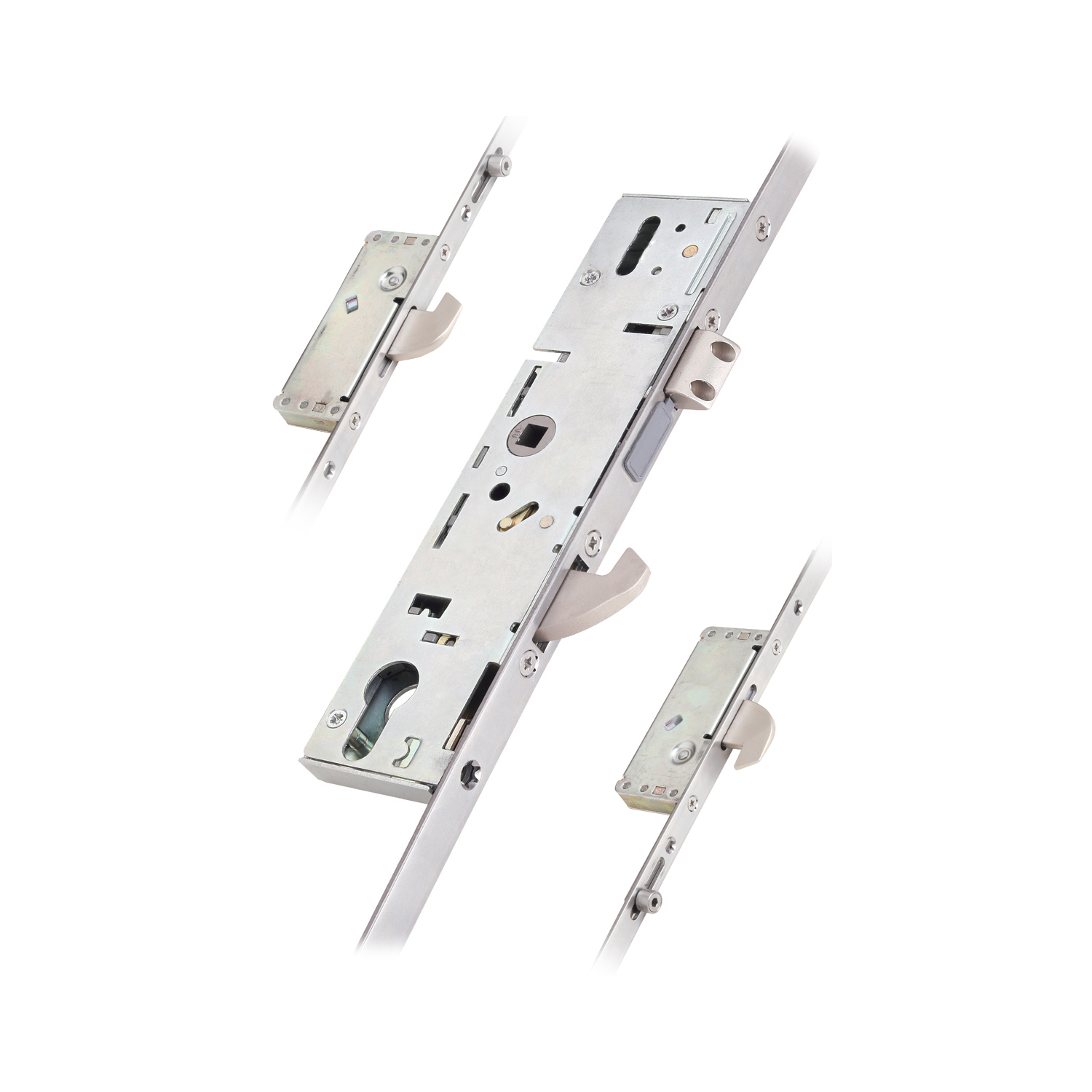
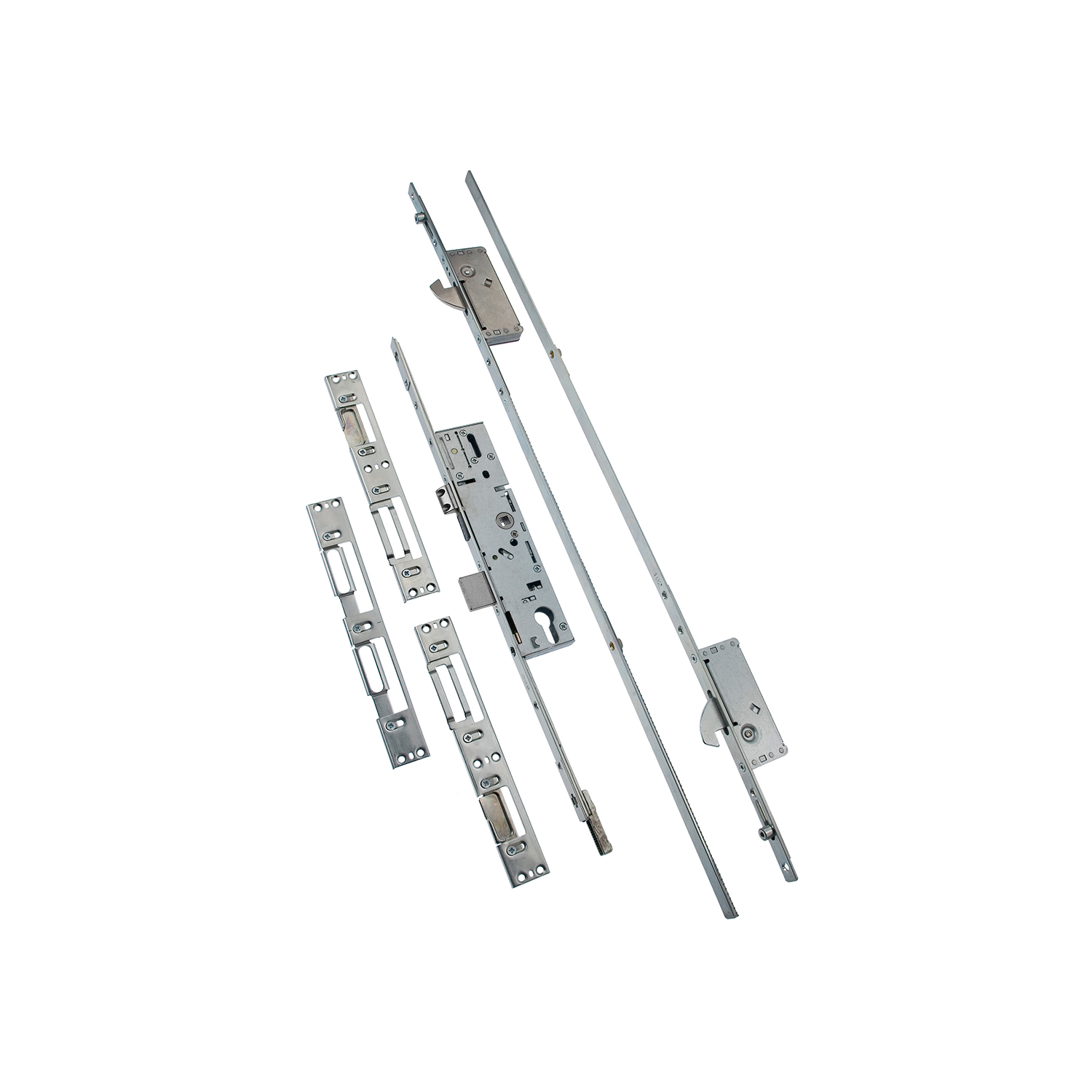
3 Hook 2 Roller Euro Cylinder Multi Point Door Lock - 6000 Series
More options available
More Information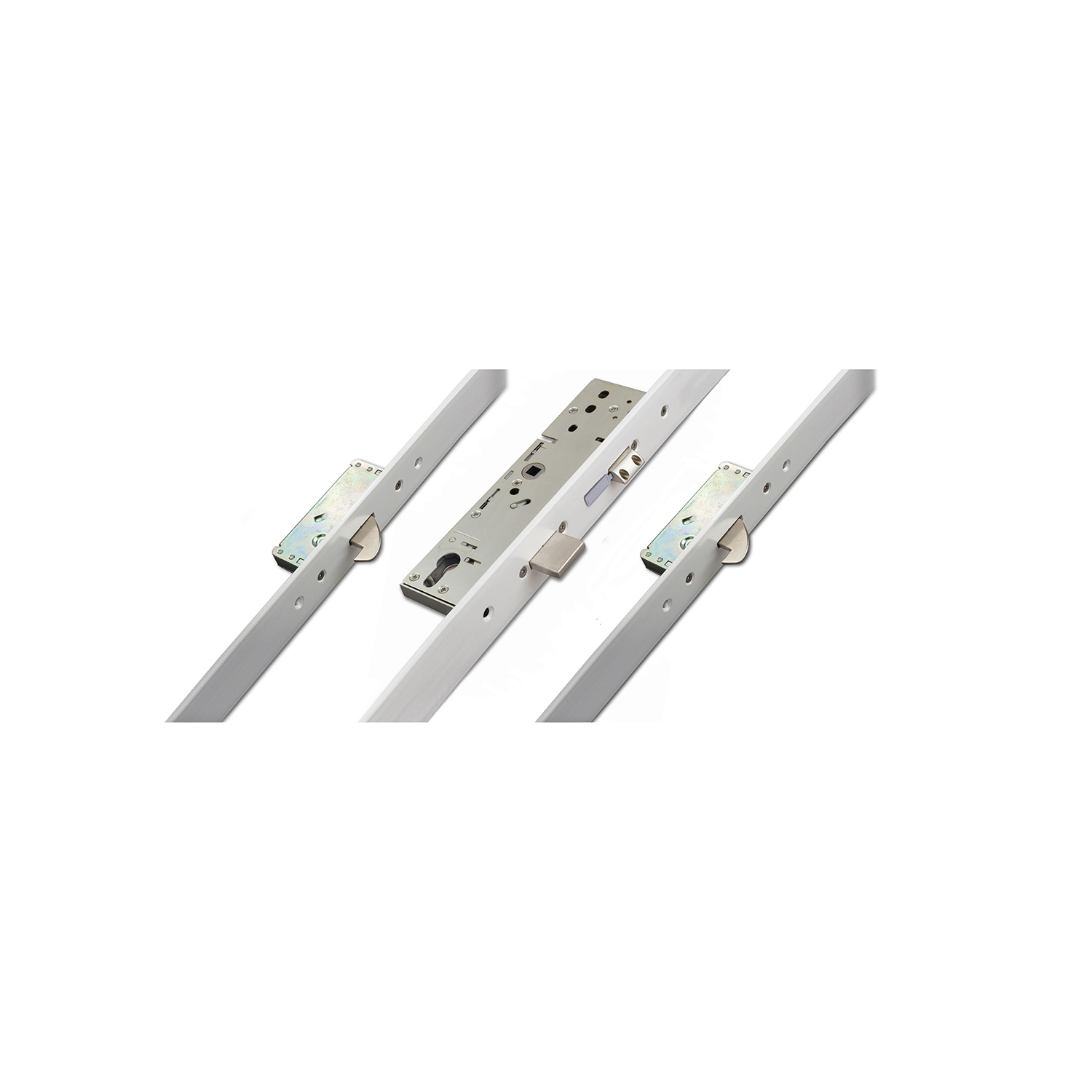
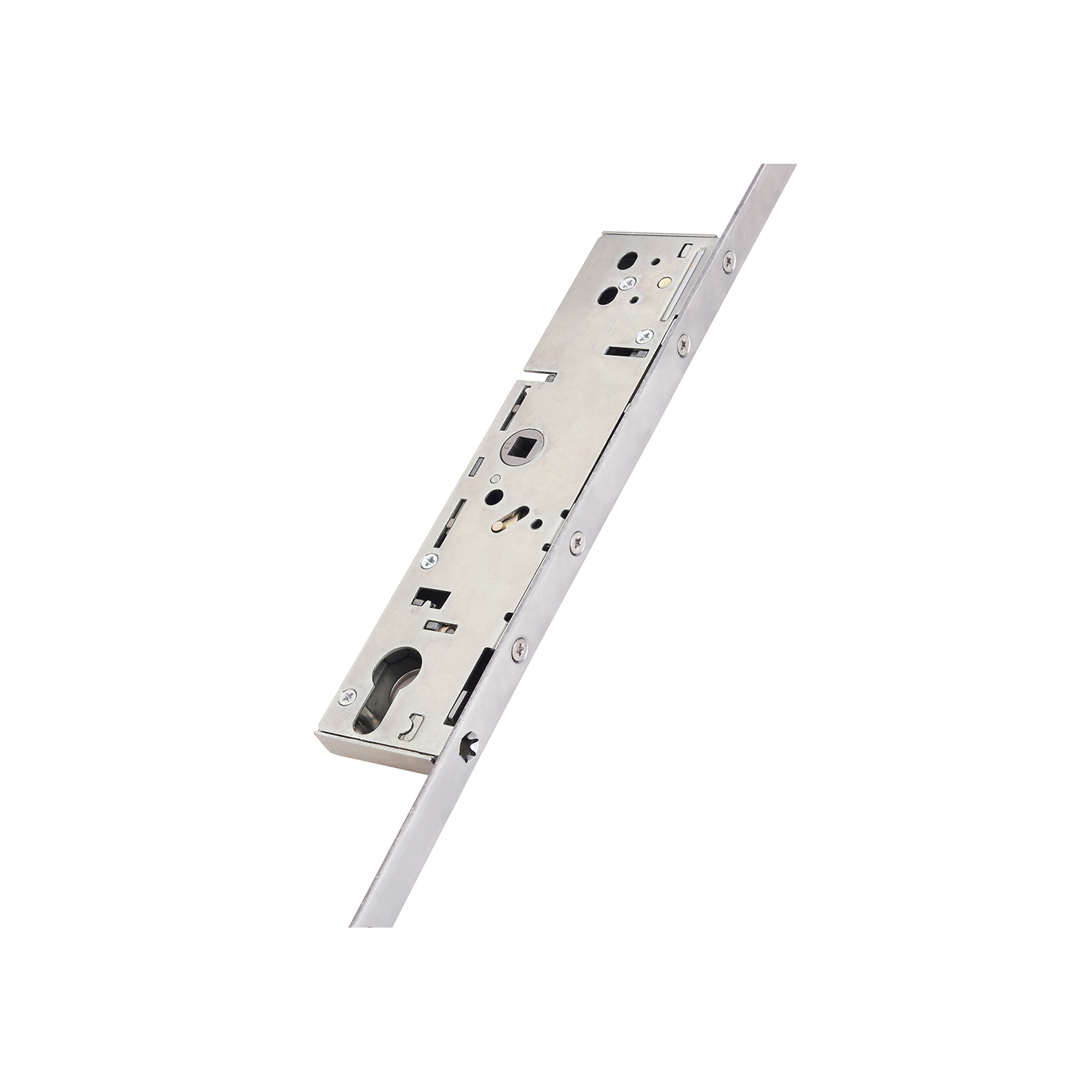
Frequently Asked Questions
What is a euro cylinder multi-point door lock?
A euro cylinder multi-point door lock is a locking mechanism that operates using a euro profile cylinder and secures a door at multiple points along its height simultaneously.
When the door handle is lifted, multiple locking bolts — typically hooks, rollers or a combination of both — extend from the lock body and engage with keeps fixed in the door frame, securing the door at several points at once.
The euro cylinder is then turned by key to fully deadlock the mechanism.
This multi-point engagement provides significantly greater resistance to forced entry than a single-point lock, making it the standard locking format for modern PVCu, composite and timber entrance doors.
What is the difference between hook locks and hook and roller locks?
Hook locks use hardened steel hooks as the primary locking bolts.
When the handle is lifted, the hooks extend and engage with matching keeps in the door frame, holding the door securely at each locking point.
Hook and roller locks combine hooks with rollers — the hooks provide the primary deadlocking function, while the rollers pull the door sash tightly against the weatherseal as the handle is lifted, improving the door's seal and overall closing performance.
Hook and roller configurations are particularly well suited to PVCu doors, where achieving a good compression against the frame seal is important for both security and weatherproofing performance.
What is a passive lock and when is it needed?
A passive lock — sometimes referred to as a slave lock — is an additional lock unit used on double door configurations where a second lock body is required to cover the full height of the door.
Rather than being operated by its own handle or cylinder, a passive lock is mechanically linked to the primary active lock and operates automatically when the main handle is lifted or the primary lock is engaged.
This ensures that locking points are distributed across the full height of the door without requiring a separate handle operation.
ERA stocks passive euro cylinder multi-point locks as part of its 6000 Series range.
What is a bolt lock for composite and timber doors?
A bolt lock uses flat or round bolts rather than hooks as the locking bolts within the multi-point mechanism.
Bolt-style locks are often specified for composite and timber doors where the frame and rebate geometry is better suited to a bolt configuration than a hook.
They can also be a practical choice for certain replacement applications where the keep positions in an existing frame are configured for bolts rather than hooks.
ERA stocks bolt locks for timber and composite doors as part of its euro cylinder multi-point lock range.
Can ERA's euro cylinder multi-point locks be used with any euro profile cylinder?
ERA's euro cylinder multi-point locks are designed to accept standard euro profile cylinders, giving installers the flexibility to specify the most appropriate cylinder for the project's security requirements.
For the highest level of security, ERA recommends pairing euro cylinder multi-point locks with a British Standard 3-star anti-snap euro profile cylinder — such as those in ERA's Fortress range — which provides certified resistance against snapping, picking, bumping and drilling.
The cylinder and lock body can be replaced independently, allowing the security level to be upgraded without replacing the full lock.
Does ERA stock replacement euro cylinder multi-point locks?
Yes. ERA's dedicated replacement lock range includes euro cylinder multi-point lock kits in a variety of hook and roller configurations, designed to replace failed or ageing locks on existing entrance doors.
Replacement lock kits are an important part of ERA's offering for installers who are called to repair or upgrade doors where the original lock has worn out or been damaged.
ERA's replacement locks are designed to be as broadly compatible as possible with the most common lock chassis dimensions found in UK residential entrance doors, reducing the complexity of sourcing a like-for-like replacement.
How do I know which euro cylinder multi-point lock is right for my door?
The key factors to consider are the door material and profile, the number and configuration of locking points required, and whether the installation is new or a replacement.
For PVCu doors, hook and roller combinations such as the ERA 3 Hook 2 Roller 6000 Series are the most commonly specified option.
For composite and timber doors, hook-only or bolt-style locks are generally more appropriate.
For replacement applications, the existing lock's backset, case dimensions and hook spacing are the critical measurements needed to identify a compatible replacement.
ERA's technical team is available to assist with specification queries and compatibility questions.
